
Your Windshield Is a Structural Shield. Treat It Like One.
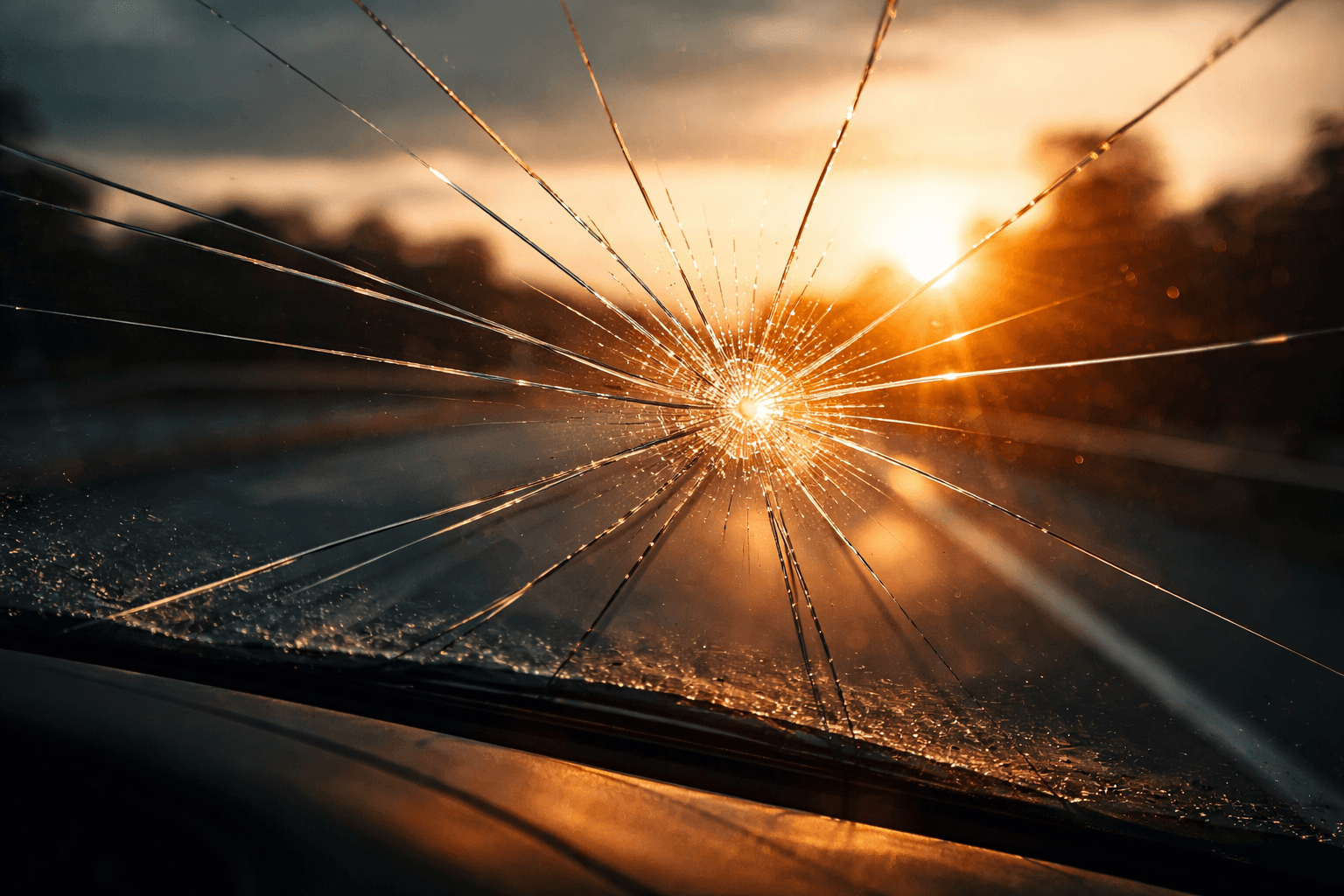
We've all been there. You're cruising down the interstate, minding your own business, when a tiny rock flies off a construction truck and smacks your windshield. That sharp crack is enough to ruin anyone's morning. While it's tempting to ignore the blemish and hope it doesn't grow, your car's glass is a critical part of its structural skeleton — not just a window to the world.
Your windshield keeps the roof from crushing inward during a rollover and ensures your airbags deploy correctly. When things go south, knowing when to patch a chip versus when to order a full replacement is the difference between a safe ride and a disaster waiting to happen.
The Science Behind the Glass
Your car doesn't use a single type of glass throughout — if it did, a minor fender bender would send dangerous shards flying. Instead, engineers specify two very distinct materials for very different jobs.
Laminated Safety Glass is what your windshield is made of. It's a glass sandwich: two panes bonded to a clear vinyl interlayer. When struck, the vinyl holds shattered fragments in place — keeping debris out and keeping you in. This is the only glass on your car that can sometimes be repaired if the damage is minor.
Tempered Glass is used for your side and rear windows. It's incredibly tough, but designed to shatter into thousands of small, relatively harmless cubes on impact. There is no repairing a broken side or rear window — it must be replaced entirely.
Knowing When to Call a Professional
Most people reach for a DIY resin kit from the auto parts store. Sometimes that's the right call — but here are the clear signals that you're past a simple patch job.
The Dollar Bill Rule. If a crack is longer than a dollar bill, or a chip is wider than a quarter, the structural integrity of the glass is likely compromised. No resin kit will restore it.
Edge Damage. Any crack that reaches the outer edge of the windshield means replacement. Edge cracks spread rapidly due to road vibration and temperature swings — often overnight.
Driver's Line of Sight. Even a flawless resin repair leaves a faint ghost. At night, that tiny distortion catches oncoming headlights and can blind you for a critical split second. Don't risk it.
The Safety Camera Zone (ADAS). If your car has a camera behind the rearview mirror for lane-keep assist or automatic emergency braking, any crack near that area forces a full replacement. Safety systems require a perfectly clear optical path.
What a Quality Installation Actually Looks Like
A proper auto glass installation isn't a quick pop-and-swap — it's a meticulous, multi-stage process. Here's what you should expect from any reputable technician.
Step 1 — Strip and Cut. The old molding is removed and the existing urethane adhesive is carefully cut away. This is the riskiest phase — a careless tech who nicks the pinchweld (the metal frame around the glass) leaves bare metal that rusts silently under the new glass. You won't see it for a year, but eventually your windshield will start leaking — or worse, fail to stay attached during an accident.
Step 2 — Prime and Protect. Any paint nicks on the pinchweld must be treated with a rust-inhibiting primer before the new glass goes in. A professional always does this. Cutting corners here means a leaking or failing windshield down the road.
Step 3 — Apply Structural Urethane. Fresh urethane adhesive is laid in a precise, continuous bead around the pinchweld using a high-pressure applicator. No gaps, no thin spots.
Step 4 — Set and Cure. The new glass is pressed into the urethane and held perfectly still while it cures. Any movement during this phase can break the seal before it fully bonds.
Camera Calibration: The Step Most Shops Skip
Replacing the glass is only half the job on any modern vehicle. Because your ADAS safety cameras are mounted to the windshield, even a shift of a single millimeter can cause your lane-keep assist to think the lane is somewhere it isn't — with potentially serious consequences.
If a shop tells you camera calibration isn't necessary after a windshield replacement, walk out. There are two accepted calibration methods — static, using targets set up in the garage, and dynamic, a calibrated test drive — and a reputable shop will perform one of them every single time.
Making the Most of Your Insurance
Many drivers have Full Glass coverage and don't even know it. In numerous states, insurers are legally required to waive your deductible for glass repairs because windshields are classified as a safety item. They would rather pay $500 now than $50,000 for a liability claim later because you couldn't see the road clearly.
Make a quick call to your insurer before you book a repair. It takes five minutes and can save you hundreds.
The 24-Hour Post-Installation Checklist
Once the new glass is seated, your job isn't quite done. The urethane needs time to fully off-gas and cure. Follow these rules for the first 24 hours.
Don't slam the doors. The sudden air pressure spike inside the cabin can push an uncured windshield right out of its fresh seal.
Leave a window slightly cracked. This allows air pressure to equalize naturally, protecting the bond from stress.
Skip the car wash. High-pressure water and chemical rinses can undermine the seal before it has fully cured.
Leave the retention tape on. That blue tape across the top of the windshield prevents the glass from sliding down the tacky adhesive while it sets. It looks rough - leave it on anyway.
Final Thoughts
At the end of the day, your car's glass is about more than aesthetics - it's a shield. Whether you choose OEM glass from the original manufacturer or quality aftermarket glass, the installation is what truly matters. Don't wait for that tiny chip to become a spiderweb across your entire view. Get it handled while it's still a simple fix.
Kyler Steele
Auto Glass Expert